News(old)
Kyung Hee Selected for Medical AI Specialized Convergence Talent Training Project 2025
2025-07-07 Academic
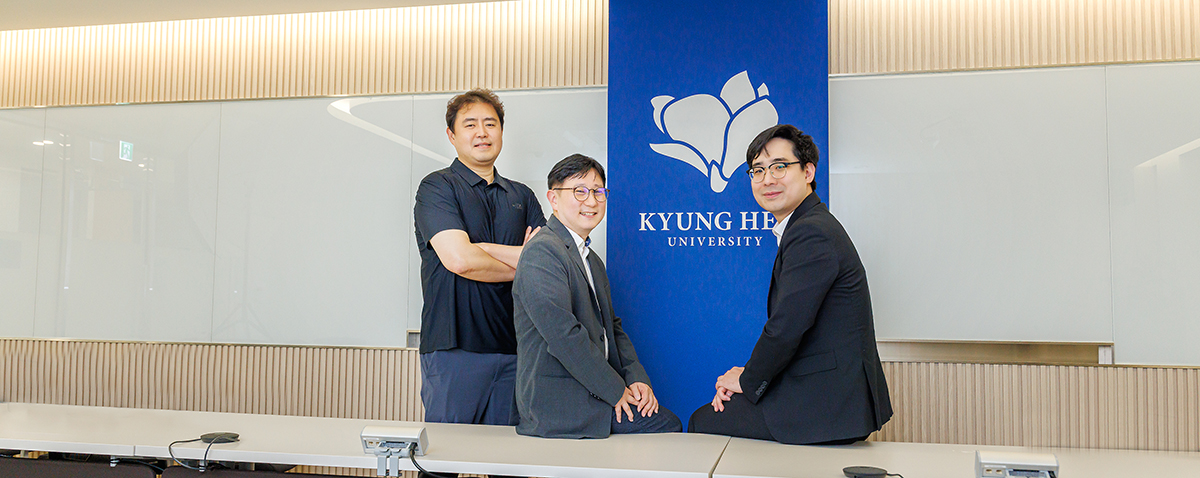
Professors Tong In Oh and Dong Keon Yon of the College of Medicine, together with Professor Jin Seok Lee of the College of Electronic Information, have been selected for the Medical AI Specialized Convergence Talent Training Project 2025, a national initiative managed by the Ministry of Health and Welfare.
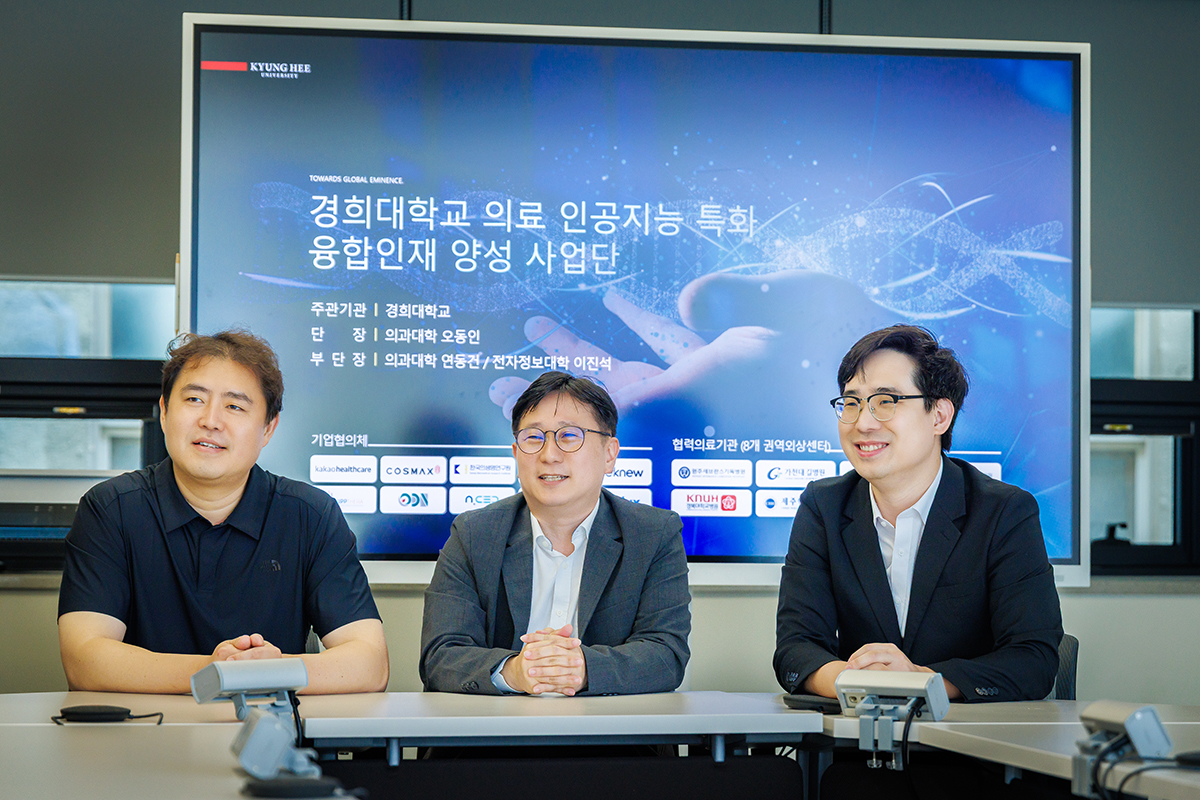
Designed to train globally competitive professionals through the convergence of AI technology and medicine, the project reflects Korea’s strategic commitment to innovation in the fields of technology and healthcare. As a result of this selection, the University will receive a total of 4.75 billion KRW over five years (1 billion per year KRW, 750 million KRW in the first year). Professor Tong In Oh serves as the director, with Professors Dong Keon Yon and Jinseok Lee as vice directors. We spoke with the team to learn more about the project. <Editor's note>
In an era where AI capabilities are becoming increasingly important, the urgent need to train professionals with both technical skills and medical knowledge
Q. Tell us about the significance of the Medical AI Specialized Convergence Talent Development Project 2025
Professor Tong In Oh: This project is hosted by the Ministry of Health and Welfare and operated by the Korea Health Industry Development Institute. Its goal is to foster future talents equipped with competencies both in medicine and engineering. Artificial intelligence has already become a part of our daily lives. In the past, digital literacy was once considered an essential workplace skill, but in the age of AI, the ability to use artificial intelligence is becoming just as critical. Medical professionals are no exception: they, too, must be AI-capable. This project aims to cultivate specialized professionals who can utilize or even develop medical AI by bridging disciplines: bringing together such medical fields as medicine, dentistry, and Korean medicine with high-tech departments like biomedical engineering and artificial intelligence.
Professor Dong Keon Yon: In preparation of the project, we formed a 6+3 consultative body encompassing medicine, engineering, and artificial intelligence. It brings together members from the Colleges of Medicine, Dentistry, Korean Medicine, Electronic Information, Software Convergence, as well as Kyung Hee University Medical Center, Kyung Hee Medical Science Research Institute, Kyung Hee Center for Digital Health, and the Medical AI Enterprise Council. Under the banner of VISION, which stands for Various, Intelligent, Specialized, Improve, Obvious, Network, the detailed goals are set as △ Training of multidimensional medical data experts (V), △ Development and establishment of an intelligent convergence education system (I), △ Education environment specialized in the field of medical AI (S), △ Establishment of a system that can continuously develop (I), △ Presentation of a clear direction (O), △ Establishment of a medical/AI cooperation network (N). By strengthening cooperation with various businesses and eight regional trauma centers nationwide, and by implementing practical, project-based learning, we aim to train a total of 140 undergraduate students and 70 graduate students across the master’s and doctoral levels.
Professor Jinseok Lee: To put it simply, medical students will follow a curriculum designed around the question: How can AI technology be utilized in clinical practice? Through this, they will deepen their understanding of both AI technologies and how to apply them in real life medical situations. On the other hand, engineering students, those who are already studying AI, will learn about the needs of the medical field and gain essential clinical background knowledge. The project is designed to encompass both the academic foundations and the technical dimensions of true medical AI.
Q. This project could greatly encourage the growth of students. What would be the immediate changes expected in students?
Professor Lee: Science and engineering students studying AI tend to focus on the technology itself. When the time comes to think about their career paths, they have to ask how the skills and knowledge they have obtained can actually be used in the real world. What the medical AI industry really needs, though, are engineers who already have a grasp of clinical knowledge. There is a clear difference between learning AI and clinical knowledge in parallel and learning one after another sequentially. When students experience both fields at the same time, it opens up new directions for them. I think that would also help them develop a stronger sense of purpose as they accumulate knowledge and hands-on experience, especially as they encounter real clinical challenges and try to solve them. Through that experience, they can naturally grow into professionals with real problem-solving skills.
Professor Yon: The curriculum has been carefully designed to support structured knowledge acquisition for students. Just as important is the education program that organically connects industry, academia, research institutes, and hospitals. Through this, students will gain firsthand experience with the technologies they are likely to encounter in their future careers. We plan to collaborate with a wide range of industry partners and provide practical, project-based learning opportunities such as joint research with eight regional trauma centers nationwide. We will also operate AI-based research platforms, such as the Smart Research Matching System and Digital Research Sandbox. In addition, we’ve established a comprehensive set of student support mechanisms, including certification programs, scholarships, pathways to graduate study, and opportunities to join industry-academia projects.
Professor Oh: This is because our society no longer needs individuals with programming skills alone. What we need instead are professionals capable of designing and applying AI models rooted in specialized knowledge and real-world experience, particularly in the medical field. To this end, we have established a specialized education system with three distinct pathways: the microdegree course of the AI Doctor Track for students in medical, dental, and Korean medicine; the Medical AI Track for engineering students; and the integrated major of the Advanced Medical AI Track for graduate students. What sets this curriculum apart is its grounding in domain knowledge. Students begin by immersing themselves in real-world medical or industrial contexts, and from there, they develop the capacity not only to utilize AI technologies but to create them.
Practicing artificial intelligence in a clinical environment with opportunities for overseas joint research
Q. From the perspective of a medical student, it can be understood as a course that allows you to practice artificial intelligence in a clinical environment.
Professor Lee: That is correct. The program includes a practical component and offers students meaningful choices. They can either work on projects with industry partners or participate in overseas training through the research networks affiliated with each faculty group. We have cooperative relationships with many prominent institutions including Harvard University, New York University, and Cornell University. We are also part of the Global AI Frontier Lab project, supported by the Ministry of Science and ICT and the National IT Industry Promotion Agency, where we conduct medical AI research. Joint research teams from NYU and domestic universities collaborate in this initiative, and students are currently being dispatched to NYU. Students from our program will also have opportunities to participate in these overseas placements through the existing collaborative framework.
Professor Yon: One of the great strengths of our project group is that researchers involved are drawing on international partnerships they’ve built through previous research and projects. For instance, our joint research lab with Harvard University has produced a number of promising research outcomes. We shared the goals of this project with the Harvard team and reached a strong consensus. Based on that shared understanding, we hope to provide students with the opportunity to gain overseas experience, building on both the knowledge and technical skills they learn here at Kyung Hee.
Professor Oh: Granted that global competency is undeniably essential in today's society, I began to question whether simply attending classes overseas is enough to truly develop it. Through this project, students have the chance to develop genuine global competency—not just by being abroad, but by engaging in joint research with world-class scholars and co-authoring papers. This is made possible by the solid groundwork laid by my colleagues, and it is on that foundation that meaningful international experience becomes achievable.
Q. We have discussed various educational methods. What is the goal of this type of education?
Professor Oh: Our goal is to train globally competent professionals with strong capabilities in medical artificial intelligence. To guide this effort, we established a strategic framework called VISION (Various, Intelligent, Specialized, Improve, Obvious, Network). We have also laid out under the framework specific strategies and support systems for students in building individual portfolios as they move through each stage of the program. Throughout the process, we help them in reflecting on their interests and clarifying what they want to pursue next.
The project stands on the research capabilities that Kyung Hee has built up over the years
Q. Tell us about how the three key members of the project came together.
Professor Oh: I had already been teaching MD-AI courses for some time, but it was Professors Yon and Lee who suggested forming this team, and I joined the project last. I felt it was important to bring together their passions and research strengths in a meaningful way. We have been close colleagues and friends for a long time, so I’m genuinely excited to be working on this project together.
Professor Yon: Medical AI is now receiving national attention. Professor Lee is one of the leading researchers in this field at the College of Engineering, and I’m conducting a number of related studies at the College of Medicine. That’s why I decided to collaborate with him. We’re always in close communication about our research.
Q. One of the key characteristics of this project is multi-modal AI. Please explain what area it specializes in.
Professor Lee: Among the many areas in medicine, our specialization is in emergency care. To begin, we need to explain the concept of the preventable trauma mortality rate—the likelihood of death resulting from either inadequate treatment or delays in treatment, despite the patient having a chance to survive. In Korea, this rate is around 15%; in other advanced countries, it is closer to 5%. Our goal is to identify areas where AI can help us close that gap and bring Korea’s rate down to the level of global best practices.
In real-world emergency medical care, we have to work with biosignals, medical imagining, and more. Even language models play a role in critical situations. This is a domain that ultimately brings together all areas of artificial intelligence. To build technologies that can save even one more life, we need research, education, and technical development working in tandem. One of our key strengths is the consortium we have formed with eight of the 17 regional trauma centers across the country. Through this partnership, we actively support joint research efforts, bringing clinical reality and technology innovation closer together.
Professor Oh: I believe artificial intelligence is essential for improving the quality of care in core medical fields, as it would drastically enhance efficiency. Emergency medical data, in particular, is highly multi-modal, as it includes text, images, signals, and more. When you start with a large language model, a wide range of data types emerges. The kind of talent needed to handle this level of complexity is fundamentally different from those who have worked on AI in isolation. We need professionals who can integrate diverse data sources in real-world clinical contexts.
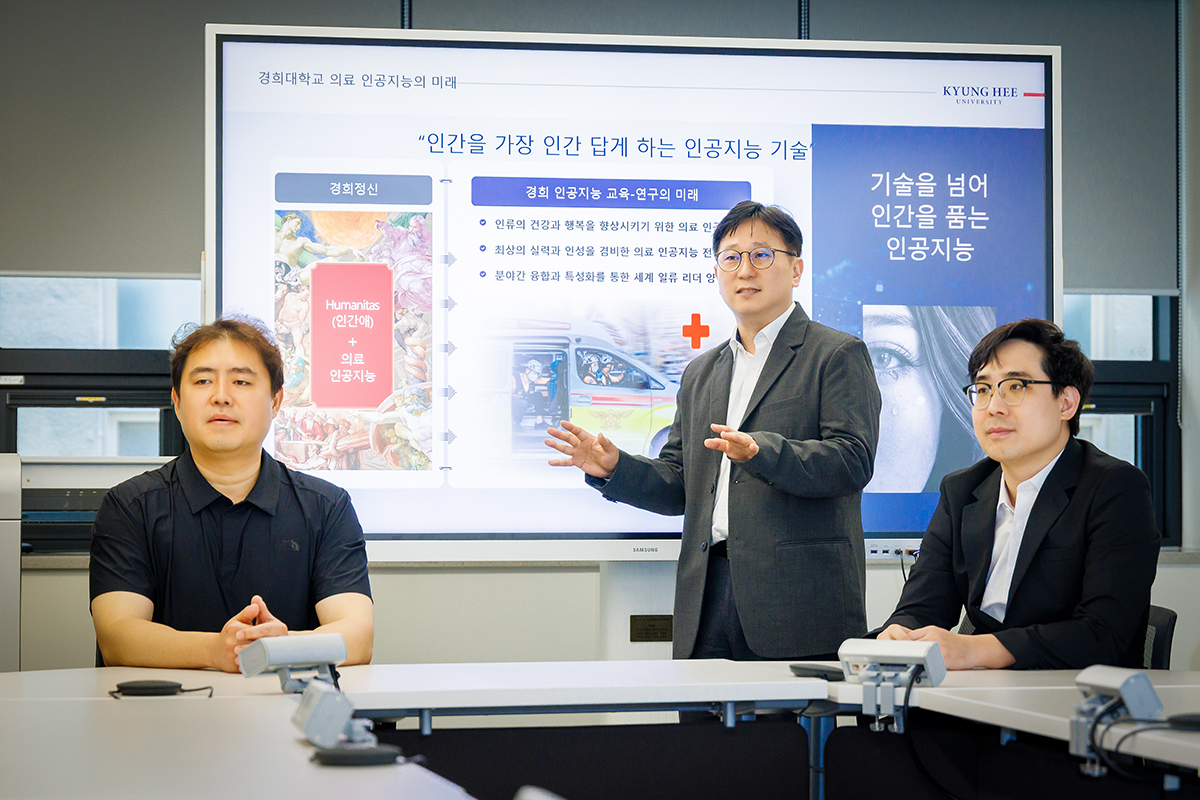
Providing learning experiences that can overcome obstacles in each academic field
Q. Among the research plans, there is an expression called “clinical-centered digital transformation model.” To what cases can this be applied?
Professor Oh: In the past, research in medicine followed the model of evidence-based medicine, relying on accumulated clinical records. But with the advent of artificial intelligence, we can move beyond evidence alone toward more precise diagnosis and prediction, leveraging a wider range of data. AI can uncover deep patterns within complex data quickly and effectively, helping us overcome the limitations of human knowledge. Ultimately, it is about raising the standard of medical care.
Among medical students, some have strong scientific capabilities but often lose the chance to develop these interests once they enter medical school. This project offers a pathway for those students to explore and apply their abilities. It also lays the groundwork for collaboration between medical and engineering students, enabling them to work on team projects now and to continue conducting joint research even after entering the field.
Professor Yon: One of the major obstacles in joint research between researchers in the medical field and engineering researchers is the difference in terminology used in each academic field. These gaps can’t be bridged by theory alone; they have to be overcome through direct experience. That’s why it’s so valuable for students to start engaging in interdisciplinary communication during their undergraduate years. Through this experience, they develop the ability to navigate and resolve real-world problems across diverse academic domains. In the long run, this is likely to have an even greater impact on their careers and on the future of the field as a whole.
Q. As a result, this educational program is designed to train medical professionals who can skillfully apply AI technology in clinical settings and draw meaningful insights from it, as well as communicate effectively with engineers. Likewise, students from engineering backgrounds will learn to engage smoothly with medical professionals and take the lead in the development of medical AI. I would like to hear your thoughts on the future of this program.
Professor Oh: The future holds many variables, and the possibilities are so wide-ranging that I feel cautious to offer a purely rosy outlook. That said, career paths for medical students are clearly diversifying. Increasingly, they are not only becoming clinicians but also CEOs and innovators. On the other side, engineering students, with the support of AI, can build medical knowledge that can be comparable to that of physicians. Recently, Kyung Hee University Medical Center has been designated as a research-oriented hospital(See the related article). The digital health field was identified as one of the key focus areas of the project.
The University is also placing strong emphasis on digital health. If we can train capable professionals through this program, I believe they will play meaningful roles not only in research-driven hospitals and but also in Kyung Hee’s future initiatives. Furthermore, the area around the Seoul Campus has been designated as the Hongneung Gangso Special Zone, which is a bio-cluster with an estimated corporate value of nearly three trillion KRW. Many experts in related fields are launching startups there, and the demand for qualified talent is high. There are, in short, many promising signs for what lies ahead.
Professor Lee: It has been nearly 15 years since smartphones became an essential part of everyday life, yet in that relatively short span, we now find it hard to imagine life without them. The changes brought on by AI are expected to unfold even faster. In fact, even AI experts struggle to predict what the next five to ten years will look like, because the pace of change is so extraordinary. In this context, I hope our students will help pioneer a new paradigm for the AI era through medical applications. The act of embracing challenges, leading shifts in thinking and perspective, and solving real-world problems: that, to me, Is what gives this project its deeper meaning. I believe that is the ultimate goal of the project.
Always remembering humanity should be the goal of medical artificial intelligence
Q. We also need to diagnose the present. I wonder if there is artificial intelligence currently being used in the field.
Professor Yon: Artificial intelligence is already being actively applied In the medical field. For instance, AI systems are now used to read most medical images, including X-rays, as a first step in the diagnostic process. Clinical decision-support systems are also in use, helping physicians make critical judgments. These developments represent the rise of so-called smart hospitals. At the same time, the broader healthcare system is also undergoing a digital transformation. Our goal is to prepare students to become the key players driving that transformation forward.
Professor Lee: Ultimately, this is also about improving the quality of medical care. Medical artificial intelligence takes over the tasks that once demanded considerable human effort, easing the workload on healthcare providers. As that burden is lifted, doctors gain the time and capacity to examine patients more thoroughly and with greater attention.
Q. This project focuses on growing future talent and professionals. Tell us more on the type of talent you are trying to foster.
Professor Oh: I began by reflecting on the unique values of Kyung Hee, the founding philosophy, and our commitment to humanity. That led me to ask: how can artificial intelligence contribute to humanity? Humanity flourishes when people are able to live happily. But in moments of existential threat, when life and death hangs in the balance, humanity is often lost. Ultimately, I believe the goal of medical AI should be to help people live healthier, happier lives.
From there, I asked what kind of talent is needed to realize that goal. They must possess not only technical excellence, but also sound character. Without ethics, even the most advanced AI can lead to harm. That is why our aim is to cultivate individuals who have both the skills and the moral foundation to use them responsibly. And because we live in an interconnected world, these individuals must also be globally competent, as they cannot be frogs in a well. That is why we have built international joint research programs into this project. In the end, the kind of talent we hope to foster is a global leader with both ability and integrity.
-
News List
-
Kyung Hee Ranked 252nd Worldwide and 5th Among Comprehensive Universities in Korea by THE World University Rankings
2025-11-10
More -
-
-
Highlight News
- There is no data.
-
Info
- University Communication & Press
- +82-2-961-0106
- khsd3080@khu.ac.kr