
News
When Cells Refuse to Die: A New Weapon Rises in the Fight Against Cancer
2025-10-17 Research
A research team led by Professor Dokyoung Kim of the College of Medicine has examined emerging cancer therapies that move beyond conventional cell-death paradigms. Focusing on the regulation of metal ion metabolism, the team outlined a new therapeutic direction that may overcome the limitations of apoptosis
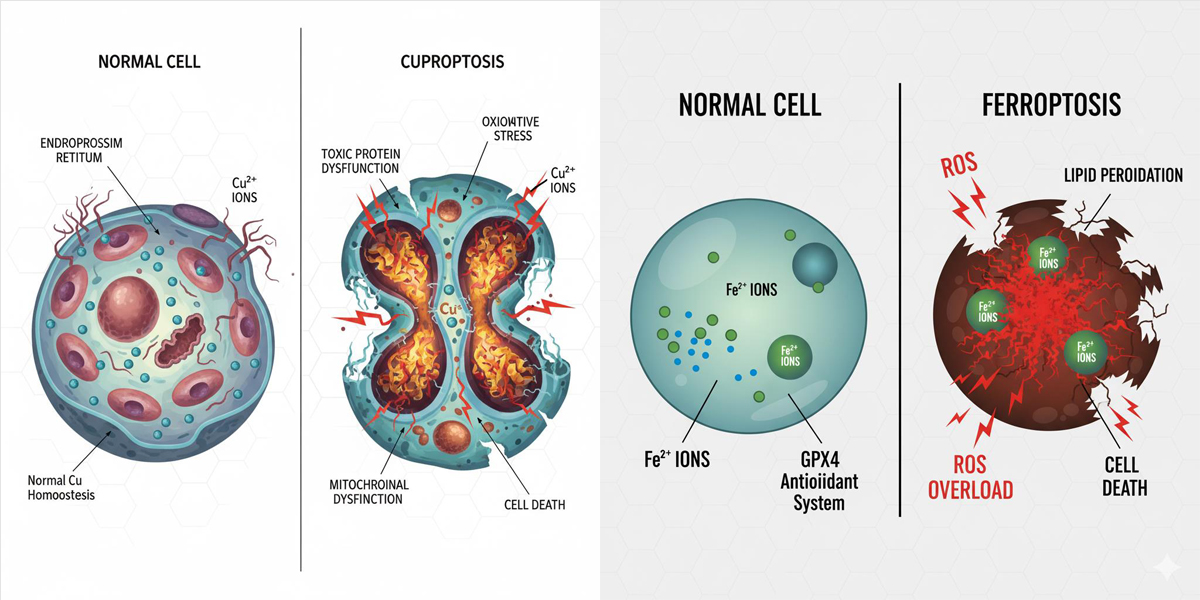
The study brings together two rapidly evolving strategies at the forefront of academic and industrial research: cuproptosis (copper-dependent cell death) and ferroptosis (iron-dependent cell death). Both pathways have drawn attention for their ability to target cancer cells that have developed resistance to standard chemotherapy. The findings were published in Coordination Chemistry Reviews (Impact Factor: 23.5, top 1% in JCR) under the title, “Beyond apoptosis: Navigating Cancer therapy with cu/Fe-Ligand Nano-complexes through Cuproptosis and Ferroptosis.”
Combining cuproptosis and ferroptosis with nanotechnology to enhance tumor targeting and minimize side effects

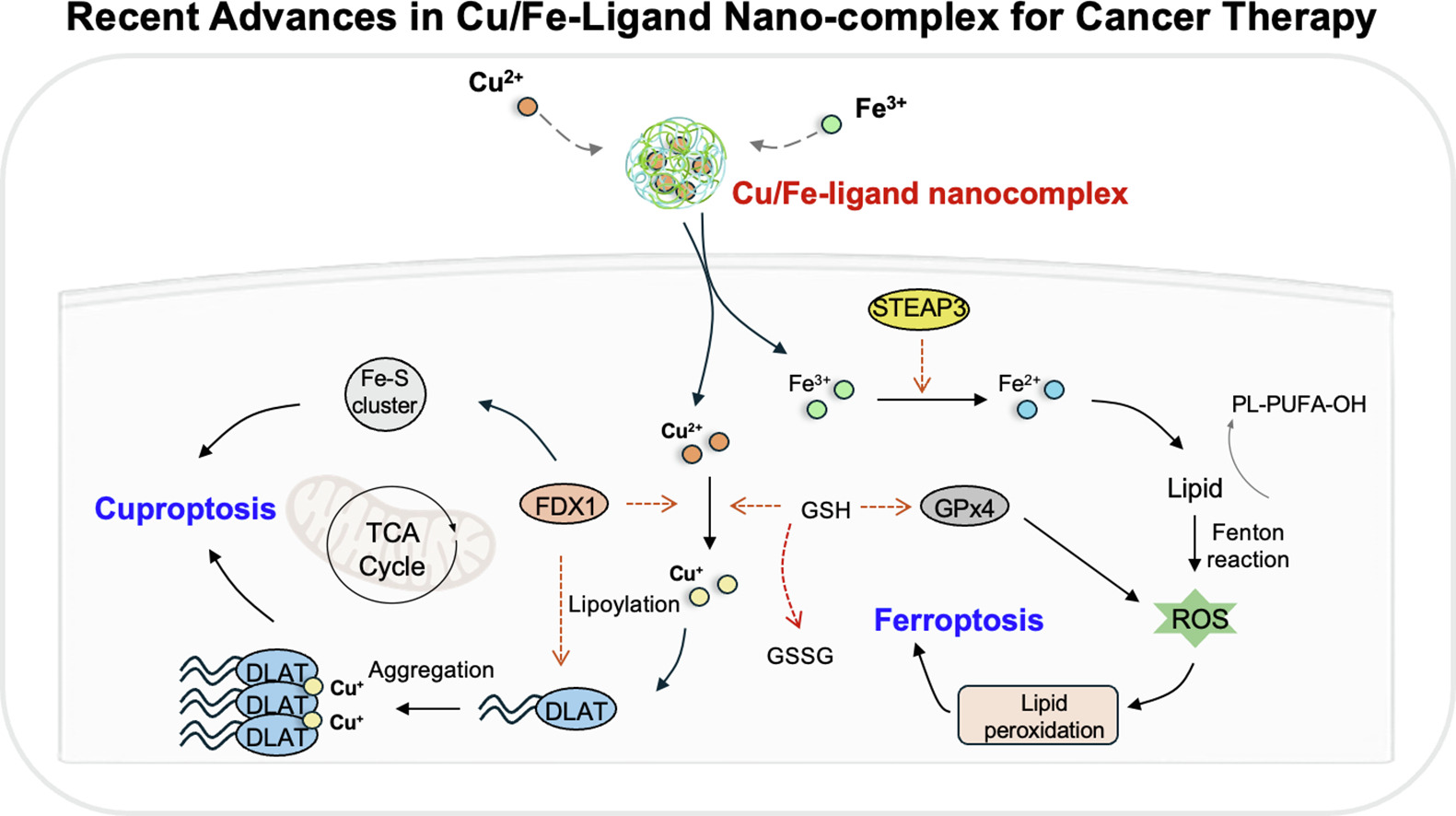
To maximize the effectiveness of cuproptosis- and ferroptosis-based therapies while addressing systemic toxicity, the researchers propose integrating these mechanisms with nanotechnology. In particular, the review identifies Cu/Fe–ligand nano-complexes as an optimal delivery platform capable of inducing both cuproptosis and ferroptosis with high efficiency.
Because direct administration of metal ions can damage healthy cells, ligands are engineered to safely encapsulate the ions and release them only within the tumor microenvironment, where cancer cells proliferate. This stimuli-responsive release design dramatically improves tumor selectivity while reducing adverse effects.
Of particular interest is the development of Cu²⁺/Fe³⁺-based nano-complexes that harness both copper and iron simultaneously. While cuproptosis and ferroptosis proceed through distinct molecular pathways, studies suggest they may interact at certain points. A Cu/Fe–ligand nano-complex can trigger both processes within a single platform, generating synergistic effects that enhance cancer cell destruction.
Even if cancer cells evade one death pathway, they can still be targeted through the other—giving this dual approach enormous potential for overcoming drug resistance. Multifunctional nanosystems that coordinate multiple death pathways could establish a new benchmark in the treatment of refractory cancers.
“Copper- and iron-based nanoplatforms present a powerful new tool against cancer drug resistance,” said Professor Kim, emphasizing the importance of translational research. “Bringing this approach into clinical practice will require close collaboration across materials science, biology, and clinical medicine.” Research Professor Byung Seok Cha, co-corresponding author of the study, added, “Our review helps set the stage for a new direction in cancer therapy. We expect it to contribute meaningfully to the development of personalized homeostasis therapeutics based on nanomedicine.”
-
Info
- University Communication & Press
- +82-2-961-0106
- khsd3080@khu.ac.kr