Research
Robots Automate Electric Vehicle Battery Replacement
2025.12.10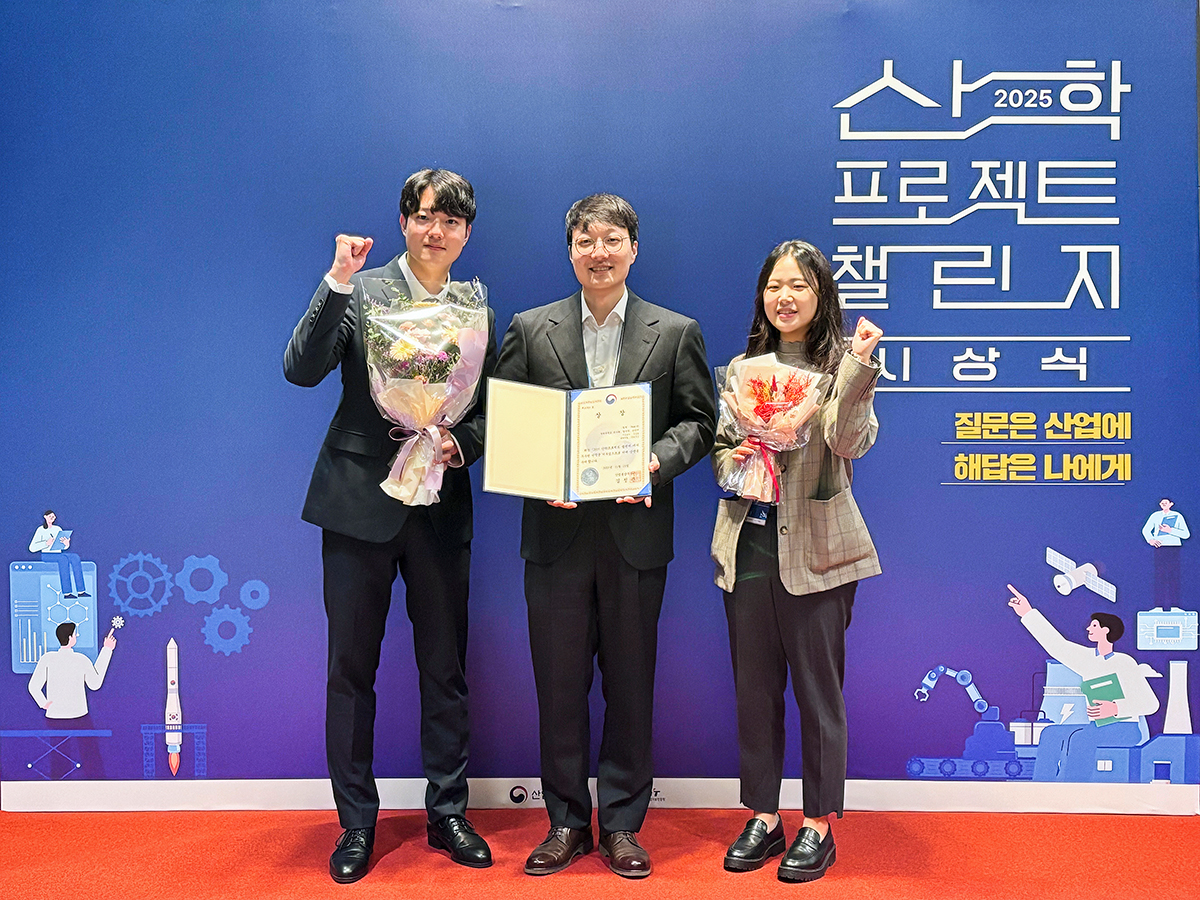
A research team led by Professor Sanghyun Kim at the Department of Mechanical Engineering received the Minister of Trade, Industry and Energy Award—the top honor—at the 2025 Industry–Academia Project Challenge, organized by the Ministry of Trade, Industry and Energy and the Korea Institute for Advancement of Technology
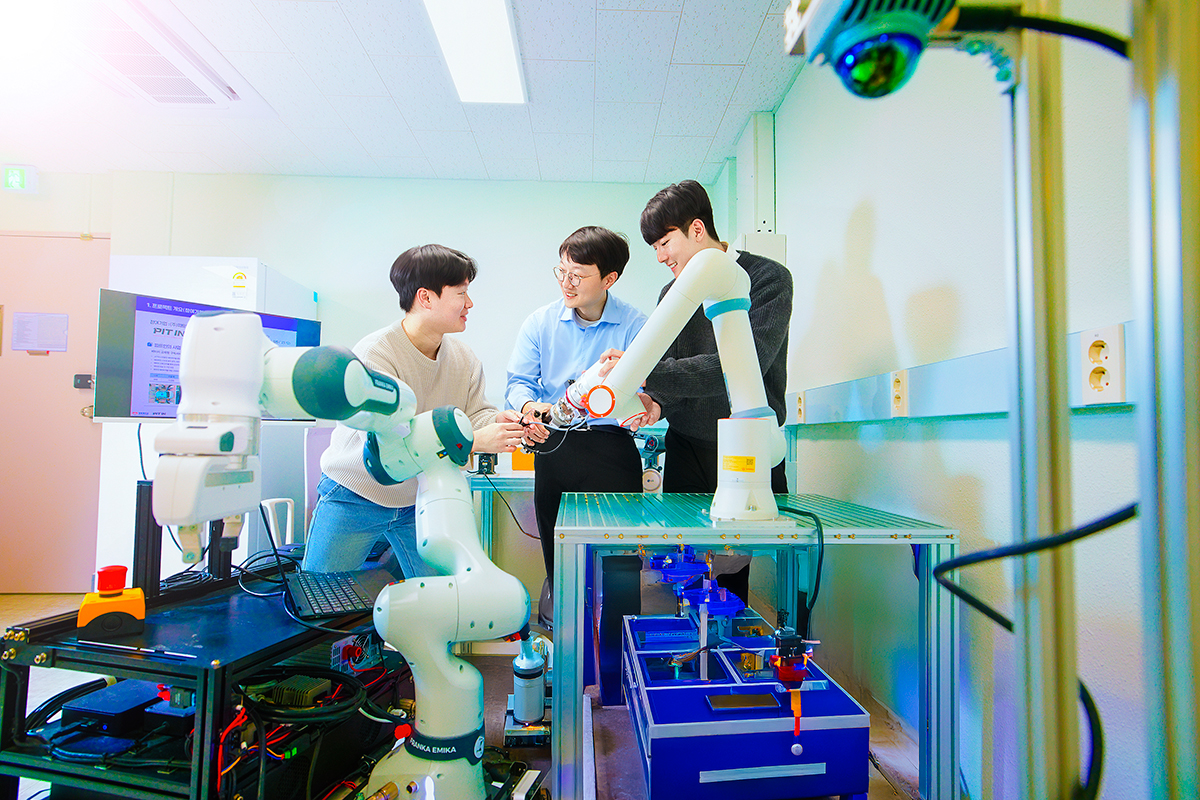
The award recognizes an industry–academia collaborative project carried out by Professor Kim’s research team, Team F1—comprising Students Suhwan Park, Eunae Kang, and Joonyeol Yang—in partnership with PIT IN Co., Ltd., under the theme “Development of Autonomous Mobile Robot Software for Automated Electric Vehicle Battery Replacement.” PIT IN provides a subscription-based EV battery swapping service in which vehicle batteries are manually detached and attached by workers, after which robots transport and manage them. However, the lack of autonomous navigation algorithms and a system for coordinating multiple robots posed significant operational challenges. To address these issues, the research team optimized autonomous driving and docking algorithms, as well as a multi-robot control system, tailoring the technologies for deployment in industrial environments. Emphasizing the educational value of the project, Professor Kim said, “This project was especially rewarding. It allowed students to see firsthand how their research moves beyond the lab and creates real impact in industry.”
From lab to industry: experiencing the full cycle of industry–academia collaboration
Following the project, the battery replacement process time was reduced by approximately twelve minutes, while overall working time decreased by 23 percent. Workplace safety was also improved by reducing the physical burden on workers. The technologies developed by the research team were successfully transferred to industry, contributing to increased service revenue for PIT IN. Serving as the team leader, Student Suhwan Park reflected on the experience, saying, “This project allowed me to experience the entire industry–academia collaboration process—from development and on-site application to technology transfer—and significantly strengthened my problem-solving skills.”The project also produced notable academic results. The research findings were published in an SCI-indexed journal, and copyrights for the developed software program were officially registered. Building on these achievements, the team is currently engaged in active discussions with robotics companies to further expand industry–academia collaboration.
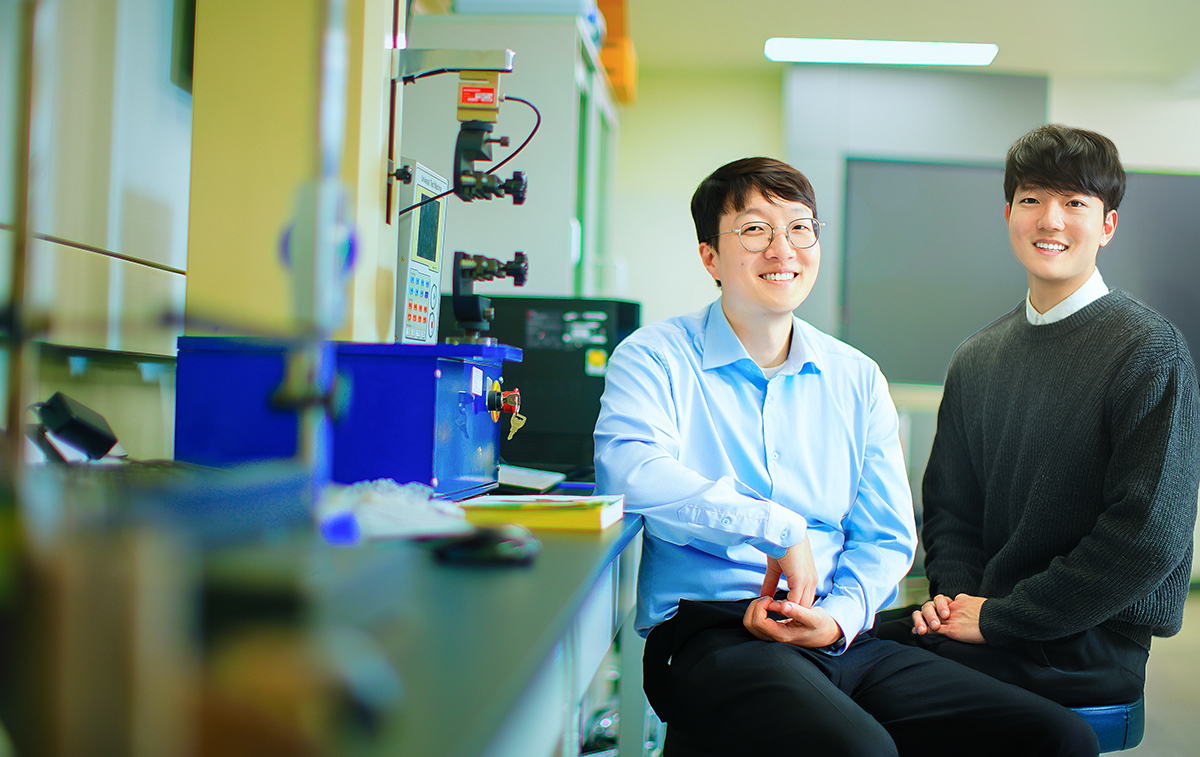
“In robotics, ideas only matter if you can actually build them—and that requires strong software skills.”
The robotics field is rapidly evolving through its convergence with artificial intelligence. Kyung Hee has been actively cultivating skilled professionals in this area through the AI Robot–Based Human–Machine Collaboration Specialist Training Program, led by Professor Sungsoo Rhim at the Department of Mechanical Engineering. The project was carried out as part of this workforce development initiative, which focuses on effective human–robot collaboration and on identifying emerging industrial demand for robotics technologies.Professor Kim’s laboratory focuses its research on the real-world demands of the robotics industry. Professor Kim underscored the importance of adaptability in engineering education, noting, “In robotics, the ability to quickly identify emerging trends is essential. Beyond mathematics and physics, engineers need strong software skills to actually build what they imagine.”
Motivated by the project, Student Park decided to pursue graduate studies to further develop his expertise. Currently conducting research in human–robot interaction, he is working on collaborative technologies that enable humans and robots to jointly lift and transport objects that are difficult for people to handle alone. Looking ahead, he said, “My goal is to develop robotics technologies that can make a tangible difference in everyday life.”
- SDG 3 - Good Health and Well-being
- SDG 7 - Affordable and Clean Energy
- SDG 8 - Decent Work and Economic Growth
- SDG 9 - Industry, Innovation and Infrastructure
- SDG 11 - Sustainable Cities and Communities
- SDG 12 - Responsible Consumption and Production
- ⓒ경희대학교 커뮤니케이션센터 communication@khu.ac.kr