Research
AI Sharpens the Accuracy of Mobile Network Traffic Classification
2025.12.10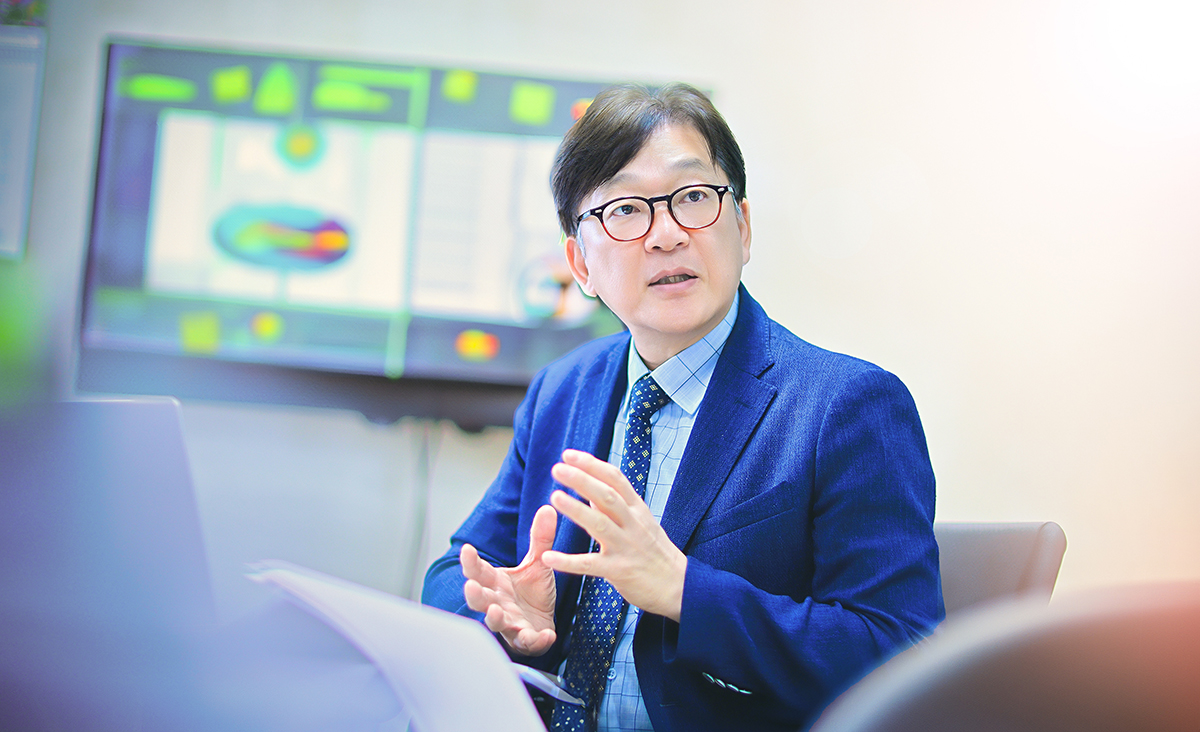
A research team led by Professor Een-Kee Hong at the Department of Electronic Engineering has developed, in collaboration with LG Uplus Corp., an artificial intelligence–based technology that accurately identifies and classifies mobile network traffic using real-world telecom operator data
The technology enables network operators to analyze traffic characteristics with high precision across regions, time periods, and service types, significantly improving the efficiency of network operations, including equipment expansion and power management. To ensure practical applicability, the research team validated the system in an operational network environment with LG Uplus, testing its performance on actual traffic data. Until now, mobile networks have largely been managed based on total data volume flowing into base stations, as there were few practical methods for distinguishing traffic types, locations, and usage contexts in detail.
The key to addressing this limitation lay in artificial intelligence. Professor Hong explained the motivation behind the research, stating, “As artificial intelligence rapidly advanced and proved capable of classifying complex data—such as images—with high accuracy, I became convinced that mobile network data could also be effectively distinguished by analyzing its underlying characteristics.” Being able to classify network traffic allows operators to tailor network management strategies to regional usage patterns, improving overall efficiency. It also helps reduce unnecessary overinvestment caused by limited insight into traffic characteristics, while enabling more targeted support for areas where network expansion is truly needed.
Over 90% accuracy in clearly defined usage environments
Mobile network traffic exhibits widely varying characteristics depending on location and service type. To address this, the research team developed an AI-based algorithm capable of classifying traffic according to these characteristics. In empirical evaluations, the model achieved accuracy rates exceeding 90 percent in environments with clearly defined user groups and usage patterns, such as apartment complexes and subway systems. Even in commercially mixed areas where regional characteristics are less distinct, the algorithm demonstrated high classification performance, proving its suitability for real-world network operation and decision-making.By precisely identifying traffic characteristics, telecom operators can predict congestion by time of day and optimize plans for equipment expansion and capacity upgrades. Professor Hong noted, “By reducing overinvestment caused by unidentified traffic characteristics and building networks tailored to regional needs, operators can improve service quality while enhancing cost efficiency at the same time.”
Toward the next generation of AI-driven networks
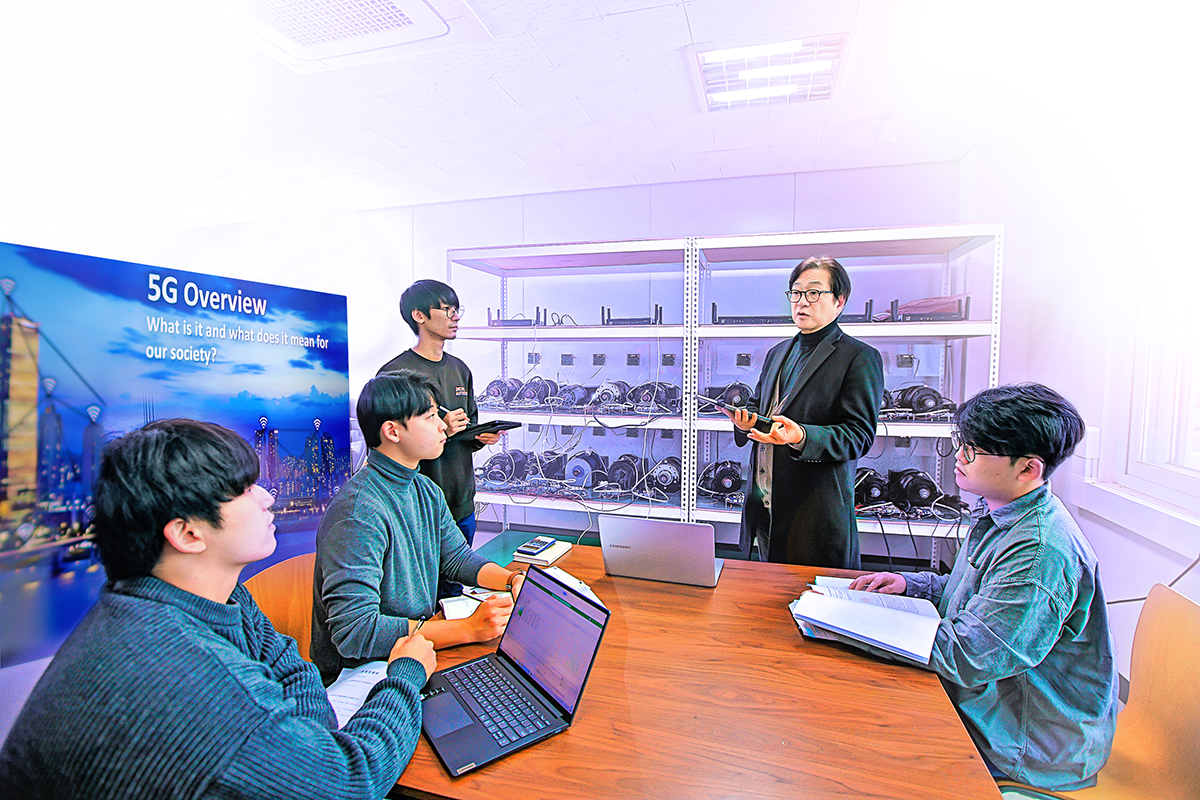
Professor Hong anticipates that mobile communication networks will fundamentally evolve into AI-driven networks. Beyond improving operational efficiency, artificial intelligence will be required to support next-generation services—such as physical AI that interacts with the real world—ensuring their stable operation on network infrastructure.This joint research demonstrates Kyung Hee’s technological capabilities and its potential for real-world application. The University and LG Uplus have agreed to continue a series of follow-up collaborative studies focused on addressing practical challenges in network operation. Led by Professor Hong, the Mobile Communications Laboratory was the first among Korean universities to operate a Private 5G network and has maintained ongoing collaborations with major companies in the field of software-based networking technologies. The laboratory has also actively pursued research on applying artificial intelligence to mobile communication networks. Reflecting these capabilities, the laboratory has secured a number of major national research projects, including the 6H Next-Generation Mobile Communications ITRC Research Center, which focuses on developing and validating core technologies for future cellular networks.
- SDG 7 - Affordable and Clean Energy
- SDG 9 - Industry, Innovation and Infrastructure
- SDG 11 - Sustainable Cities and Communities
- SDG 12 - Responsible Consumption and Production
- SDG 17 - partnerships for the goals
- ⓒ경희대학교 커뮤니케이션센터 communication@khu.ac.kr